Showing posts with label Professional Development. Show all posts

Tuesday, June 24, 2014

How to Use Your Summer for Lesson Planning

The National Writing Project is putting on a Connected Learning MOOC (Massive Open Online Course) this summer.

I first learned about Connected Learning through an #engchat on Twitter led by Seecantrill.  So far, as I understand it, Connected Learning uses digital tools to break down classroom walls - learning takes place in the classroom, but continues outside the classroom, thanks, in part, to social media and other tools that can be used to share ideas.  I don't know if that's completely right.  In fact, just now looking up what NWP calls it, it's much more than that: "Connected Learning is a model of learning that holds out the possibility of reimagining the experience of education in the information age.  It draws on the power of today's technology to fuse young people's interests, friendships, and academic achievement through experiences laced with hands-on production, shared purpose, and open networks."  Here's their infographic that explains it so much better than I do.  [UPDATE: I forgot to mention my one concern with this - around 25% of my students don't have cell phones/text/data plans or computer access outside of school.  So all of their out-of-classroom learning needs to take place face to face?]

So week one was to make a "How To . . ."  This was a good "get to know you" activity - some made "makes" that were "How to be so-and-so."  Others taught a skill they knew something about.  Here's mine (better late than never):


This week is learning through the use of memes.  I believe mine is academic, and should appeal to the students I had last year:


It appeals to my interests, but I don't think I can ask my students to make a meme on the sentence of the week and call it connected learning.

Look out for more memes here and whatever makes I'm assigned in coming weeks.

Thursday, June 21, 2012

Summer Reading 2012

This summer, like last summer, I'm brushing up on some professional development reading I've been meaning to get done.  Also like last year, I'll be tweeting my thoughts while reading with the hashtag #PiPreading.  Unlike last year, I'm choosing only two books and keeping the readings to an average of 30 pages per week so I can realistically get through it all.

Consider this your notice to get these books, read along, and share your thoughts on Twitter - if you dare.

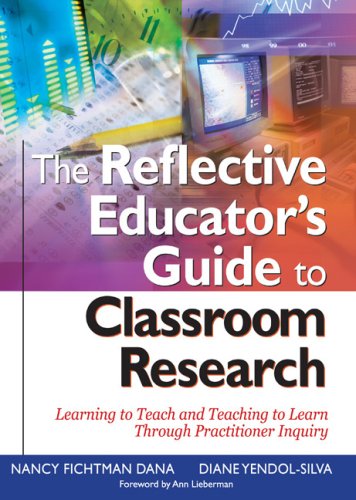
Dana, N. F. & Yendol-Silva, D.  (2003).  The reflective educator's guide to classroom research: Learning to teach and teaching to learn through practitioner inquiry.  Thousand Oaks, CA: Corwin Press.

(There's also a second edition by Danna and Yendol-Hoppey.)

First heard about this book here via Bud.  Dana and Yendel-Hoppey take readers step-by-step through the planning, implementation, and publishing of an inquiry project, helping teachers complete their own research as to how their students learn best.

I love classroom research because I'm a nerd like that.  I had thought I'd have to take some statistics courses and get a doctorate in order to do any legitimate educational research of my own, but the first chapter of this book has suggested I can just do a different kind of research1.


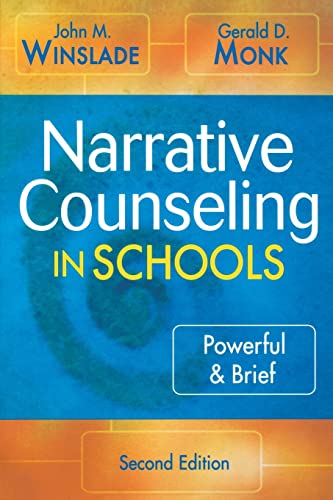
Winslade, J. M. & Monk, G. D.  2007.  Narrative counseling in schools (2nd ed.).  Thousand Oaks, CA: Corwin Press.

This was on last summer's list, but I didn't get past Marzano.  A suggestion from my partner Jennie from the place where social work and education meet.  Narrative counseling is talk therapy that places problems outside the individual - rather than the student has behavior problems, behavior problems affect the student.  "If we are located in a school story line as dumb, mischievous, or a bad egg, there is a tendency to live our lives according to the contours of the problem story laid out before us by such a description" (p. 3).  The objective of narrative therapy is to help the student rewrite that story line.  I would argue that teachers are the ones most responsible for writing the original story line to begin with, so who better to help the students rewrite it2?


Here's my proposed schedule - I'm going to start this week so those of us who start school before Labor Day3 won't have much reading to do once school has started back up.

The Reflective Educator's Guide to Classroom Research
  • By Monday, June 25th, read to page 48. 
  • By Monday, July 2nd, read to page 63.
  • By Monday, July 9th, read to page 106.
  • By Monday, July 16th, finish the book (p. 148).
Narrative Counseling in Schools
  • By Monday, July 23rd, read to page 22.
  • By Monday, July 30th, read to page 70.
  • By Monday, August 6th, read to page 122.
  • By Monday, August 13th, read to page 174.
I'll be commenting on my reading @bleckley with the hashtag #PiPreading.  Hope I'll hear from you too4.

1. We'll see how it goes.  Seems much more subjective research and I'm not sure how I'd mitigate my bias for wanting my planned lesson to work.  Go back.
2. Okay, besides great school counselors and social workers.  Go back.
3. Suckers.  Go back.
4. Because last year it was just my dad.  Which was awesome.  But he didn't tweet.  So it was a very one sided conversation.  Which was fine, since I do like to hear myself talk . . . er, tweet?  Go back.

Friday, October 21, 2011

The Brain Dance

At the beginning of this year I attended a new teachers academy, as I was a new teacher in Beaverton School District.  As expected, some information was a review, and some was valuable new ideas.

One of those ideas was the Brain Dance.  This was developed by Ginger Habel, a mentor-teacher in Beaverton, for her Master's thesis.  When students find out or enter the classroom to take a quiz or test, they are in a fight or flight mode, with most of the blood in their brain stem.  This does not serve them in an academic environment as all the information and analytic prowess is centered in the now oxygen-starved cerebrum.


The purpose of the Brain Dance is to move blood from the brain stem to the cerebrum by getting them active and making them laugh.  Which, as you can tell from the video of me leading the Brain Dance before a quiz earlier this week, is well accomplished by the dance routine.


I forgot some of the original moves when I first taught them the Brain Dance, and they have stuck.  But here's the original list Ginger Habel was kind enough to send me:


After the Sunrise: 3 big yoga breaths.  Start arms low and breath in while arms reach for the sky
Chariots of Fire:  Slow mo run
Staying Alive: Disco move- point left cross body (2) point right cross body (2) both arms (2-3)
YMCA: You know this one!
Hand Jive: Hit legs twice, clap twice, shuffle twice, pound it twice then point right then left
Billie Jean:  Moon walk
Thriller: Scary hands (right, left right) then walk, scary hands again, walk back finish with scary hands
Chicken Dance: You know this one
Ice Ice Baby: This is the running man or run backwards (The Jerk- some kids call it)
Mony Mony: Ride the pony!  Lasso in air, reins in hands and gallop around in a circle
Jump Around: Just jump up and down
The Rose: Butterfly hands up left, Butterfly hands up right, then swirl from high to low and end with right arm reaching toward sky (like it's growing!)
What is Love: Head bobs- 4 to the right, 4 to the left then repeat both sets
Cotton-Eyed Joe: Cowboy kick right and left or a variation of jumping around
Hey Ya: Shopping cart, Lawn mower start, Sprinkler then end with Yoga breaths as music fades.


And I will link to the CD track in this post next week - the CD lives next to my school CD player right now.

Update: 12/21/2011 - Sorry this took so long, y'all.  Here's the CD track.  I'm not sure how much bandwidth I have, so if you have trouble downloading it, come back and try again the next day.

Wednesday, August 17, 2011

Welcome edcampPDX Participants

Here are links to the different tools I'll reference today:

THIEVES Previewing
Article of the Week Example

Good News Sites

Scholastic News
Headlines Spot for Kids
Science News for Kids
CNN (video)

Lexile Analyzer 

If you have further questions or ideas about prior knowledge, content area literacy, or anything education, continue the discussion in the comments or on Twitter @bleckley.

Saturday, June 25, 2011

Summer Reading Schedule

So looking at the page counts we're dealing with, we've got 770 pages to cover in 10 weeks.  That's about 77 pages per week.  Hopefully I'm not the only one having second thoughts.

Classroom Assessment and Grading that Work
  • By Saturday, July 2, read through page 88.
  • By Saturday, July 9, finish the book.

Narrative Counseling in Schools
  • By Saturday, July 16, read through page 87
  • By Saturday, July 23, finish the book.

Comprehensive Classroom Management
  • By Saturday, July 30, read through page 76
  • By Saturday, August 6, read through page 155
  • By Saturday, August 13, read through page 254 (ouch)
  • By Saturday, August 20, read through page 330
  • By Saturday, August 27, read through page 428 (ouch again)
  • Saturday, September 3 - catch-up day if needed 
I realize this isn't ideal for those not on the west coast.  Should we knock out Marzano or Winslade in just a week to accomodate those who'll start school around August 20th?  Your questions, comments, concerns, threats, and tomatoes are are welcomed in the comments.

Saturday, June 18, 2011

Summer Reading 2011

As I did last summer, I'll be doing some summer reading and blogging about three professional development books.  This year, if you care to read along, I'll be posting a reading schedule here in one week's time, and tweeting reading responses as bleckley on Twitter with the tag #PIPreading - I'll probably be more reliable with 140 characters than with a full post per chapter. 

Consider this your notice to track down the titles - links go to librarything.com, where you'll find a number of sources for finding these titles on the upper right side of the screen including Amazon, Abe's, and WorldCat.

Marzano, R. J.  2006.  Classroom assessment and grading that work.  Alexandra, VA: ASCD.

Another meta-analysis of best practice for the classroom.  Marzano compiles hundreds of studies on assessment and calculates the effect size of various strategies, helping readers determine what will best help their students grow.  I got a chance to peruse the first chapter this spring and have a great post scheduled to publish this coming Monday.  This is the science of teaching at its best.

Winslade, J. M. & Monk, G. D.  2007.  Narrative counseling in schools (2nd ed.).  Thousand Oaks, CA: Corwin Press.

A suggestion from my partner Jennie from the place where social work and education meet.  Narrative counseling is talk therapy that places problems outside the individual - rather than the student has behavior problems, behavior problems affect the student.  "If we are located in a school story line as dumb, mischievous, or a bad egg, there is a tendency to live our lives according to the contours of the problem story laid out before us by such a description" (p. 3).  The objective of narrative therapy is to help the student rewrite that story line.  I would argue that teachers are the ones most responsible for writing the original story line to begin with, so who better to help the students rewrite it (besides Jill Griffin or other incredibly amazing school counselors)?

Winslade and Monk describe how to do a narrative therapy step-by-step, and how to apply it to different situations.  They also discuss bringing narrative therapy into schools and the resistance one might face.

I'm pretty gung-ho about this one, so if you find yourself skeptical, I'd appreciate having you read along and help keep me reading critically.

Jones, V. & Jones, L.  Comprehensive classroom management: Creating communities of support and solving problems (9th ed.).  Upper Saddle River, NJ: Pearson/Merrill Publishers.

This is the book on classroom management I should have read in college.  In January 2010, I read Marzano's Classroom Managment that Works, and while it gave me some quick, go-to strategies, it barely brushed the surface.  Comprehensive Classroom Management is certainly comprehensive.  It tackles the issue from a solutions-based, prevention viewpoint.  I only got a chance to read one chapter this year, but that alone made a huge difference in the tone of my classroom.

This one is $90 new and the cheapest I found used was $50, so you may want to do an inter library loan on this one.  I'll be reading it last, as I'll be waiting for a copy to come in from some distant college library as well.

Marzano, R. J.  2007.  The art and science of teaching.  Alexandra, VA: ASCD.

This is a bonus book if there's time before school starts back up.  More Marzano for the coffers.  Quite a title for such a thin book . . . we'll see if it lives up to it.

Friday, October 8, 2010

Welcome OCTE Conference Colleagues . . .

. . . and future edubloggers!

Here are a few of the links I spoke about briefly:
Dan's Concept Checklist
How Dan Assesses

My Reading Skills Sheet

I also referenced a couple posts about why I blog and an example post for when I had a question rather than a great idea to share.  Feel free to read these if it is helpful.

Below are links from the handout. Feel free to continue the conversation we started today in the comments, and please let me know when you start blogging - I want to steal your ideas!

Great Edubloggers to Follow

Kylene Beers, Language Arts
Dina, Language Arts
Dana Huff, Language Arts
Bud Hunt, Language Arts / Technology
Clay Burell, General Education
Dan Meyer, Math
Kate Novak, Math
Karl Fisch, Math / General Education / Technology

An added bonus for blog visitors: to the left of this post you can find my aggregator and recent posts I've read and enjoyed.

Put Together a Reading List

Step 1. Choose a reader.

Google Reader is a popular web based reader that also has some social functions built in.

FeedReader I haven't used; I actually just found it with a Google search. You download it to the computer, connect to the internet, download your feeds and then can read offline.

Firefox, the web browser, also has a feed reader built in if you're not ready to dive into a separate account or program.

Step 2. Find a blog.

Some good ones are up top. You can also go to those blogs and see who they follow (look for a sidebar titled “Aggregator” or “Who I Read”).

Step 3. Find the rss feed.

Usually marked by an orange icon that looks like the one at the top left hand corner of this page labeled "Posts."
Right click on this icon and select “Copy link address.”
Paste this into your feed reader.

RSS feeds can be a pain sometimes. With many feed readers, if you can't find the rss feed, you can just enter the blog address. If you're using Google Reader, you can also look for an "Add to Google" button.

Step 4. Read regularly and repeat.

You don't have to read everything a blogger posts. You won't be able to once you build up your reading list. Just browse for the titles and authors that catch your attention.

Starting Your Own Blog

Step 1. Choose a blogging service.

Blogger is a completely free blogging service also run by Google.

Edublogs has a free account option, or you can pay for more features.

Word Press is a free blogging platform, but you have to find hosting for it. This offers more features, but the average individual will have to pay for a web hosting service.

Live Journal hosts your blog but puts ads on your site.


Step 2. Sign-up for a blog.


Step 3. Write your first post. You could just polish up the one you wrote today.


Step 4. Post a comment about it here so others from the conference can read your posts.