Showing posts with label Summer Reading. Show all posts

Thursday, June 21, 2012

Summer Reading 2012

This summer, like last summer, I'm brushing up on some professional development reading I've been meaning to get done.  Also like last year, I'll be tweeting my thoughts while reading with the hashtag #PiPreading.  Unlike last year, I'm choosing only two books and keeping the readings to an average of 30 pages per week so I can realistically get through it all.

Consider this your notice to get these books, read along, and share your thoughts on Twitter - if you dare.

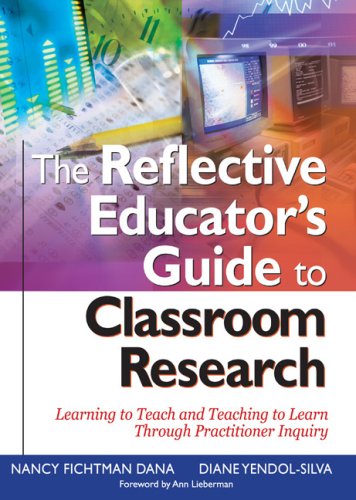
Dana, N. F. & Yendol-Silva, D.  (2003).  The reflective educator's guide to classroom research: Learning to teach and teaching to learn through practitioner inquiry.  Thousand Oaks, CA: Corwin Press.

(There's also a second edition by Danna and Yendol-Hoppey.)

First heard about this book here via Bud.  Dana and Yendel-Hoppey take readers step-by-step through the planning, implementation, and publishing of an inquiry project, helping teachers complete their own research as to how their students learn best.

I love classroom research because I'm a nerd like that.  I had thought I'd have to take some statistics courses and get a doctorate in order to do any legitimate educational research of my own, but the first chapter of this book has suggested I can just do a different kind of research1.


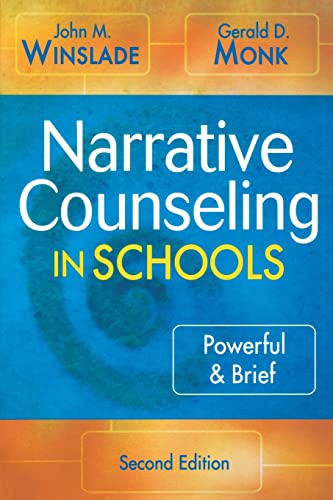
Winslade, J. M. & Monk, G. D.  2007.  Narrative counseling in schools (2nd ed.).  Thousand Oaks, CA: Corwin Press.

This was on last summer's list, but I didn't get past Marzano.  A suggestion from my partner Jennie from the place where social work and education meet.  Narrative counseling is talk therapy that places problems outside the individual - rather than the student has behavior problems, behavior problems affect the student.  "If we are located in a school story line as dumb, mischievous, or a bad egg, there is a tendency to live our lives according to the contours of the problem story laid out before us by such a description" (p. 3).  The objective of narrative therapy is to help the student rewrite that story line.  I would argue that teachers are the ones most responsible for writing the original story line to begin with, so who better to help the students rewrite it2?


Here's my proposed schedule - I'm going to start this week so those of us who start school before Labor Day3 won't have much reading to do once school has started back up.

The Reflective Educator's Guide to Classroom Research
  • By Monday, June 25th, read to page 48. 
  • By Monday, July 2nd, read to page 63.
  • By Monday, July 9th, read to page 106.
  • By Monday, July 16th, finish the book (p. 148).
Narrative Counseling in Schools
  • By Monday, July 23rd, read to page 22.
  • By Monday, July 30th, read to page 70.
  • By Monday, August 6th, read to page 122.
  • By Monday, August 13th, read to page 174.
I'll be commenting on my reading @bleckley with the hashtag #PiPreading.  Hope I'll hear from you too4.

1. We'll see how it goes.  Seems much more subjective research and I'm not sure how I'd mitigate my bias for wanting my planned lesson to work.  Go back.
2. Okay, besides great school counselors and social workers.  Go back.
3. Suckers.  Go back.
4. Because last year it was just my dad.  Which was awesome.  But he didn't tweet.  So it was a very one sided conversation.  Which was fine, since I do like to hear myself talk . . . er, tweet?  Go back.

Tuesday, June 28, 2011

Summer Reading 2011 on Twitter

My copy of Classroom Assessment & Grading that Work just arrived.  This evening or tomorrow, I'll start the reading due Saturday, this year tweeting responses as I read with the hashtag #PIPreading.  If you're reading or have read Classroom Assessment, hopefully you'll help make this more than a one sided conversation.  I'll be searching Twitter for that hashtag, but if you'd like to leave your Twitter ID in the comments, I'll just follow you.  Mine is bleckley.

Saturday, June 25, 2011

Summer Reading Schedule

So looking at the page counts we're dealing with, we've got 770 pages to cover in 10 weeks.  That's about 77 pages per week.  Hopefully I'm not the only one having second thoughts.

Classroom Assessment and Grading that Work
  • By Saturday, July 2, read through page 88.
  • By Saturday, July 9, finish the book.

Narrative Counseling in Schools
  • By Saturday, July 16, read through page 87
  • By Saturday, July 23, finish the book.

Comprehensive Classroom Management
  • By Saturday, July 30, read through page 76
  • By Saturday, August 6, read through page 155
  • By Saturday, August 13, read through page 254 (ouch)
  • By Saturday, August 20, read through page 330
  • By Saturday, August 27, read through page 428 (ouch again)
  • Saturday, September 3 - catch-up day if needed 
I realize this isn't ideal for those not on the west coast.  Should we knock out Marzano or Winslade in just a week to accomodate those who'll start school around August 20th?  Your questions, comments, concerns, threats, and tomatoes are are welcomed in the comments.

Saturday, June 18, 2011

Summer Reading 2011

As I did last summer, I'll be doing some summer reading and blogging about three professional development books.  This year, if you care to read along, I'll be posting a reading schedule here in one week's time, and tweeting reading responses as bleckley on Twitter with the tag #PIPreading - I'll probably be more reliable with 140 characters than with a full post per chapter. 

Consider this your notice to track down the titles - links go to librarything.com, where you'll find a number of sources for finding these titles on the upper right side of the screen including Amazon, Abe's, and WorldCat.

Marzano, R. J.  2006.  Classroom assessment and grading that work.  Alexandra, VA: ASCD.

Another meta-analysis of best practice for the classroom.  Marzano compiles hundreds of studies on assessment and calculates the effect size of various strategies, helping readers determine what will best help their students grow.  I got a chance to peruse the first chapter this spring and have a great post scheduled to publish this coming Monday.  This is the science of teaching at its best.

Winslade, J. M. & Monk, G. D.  2007.  Narrative counseling in schools (2nd ed.).  Thousand Oaks, CA: Corwin Press.

A suggestion from my partner Jennie from the place where social work and education meet.  Narrative counseling is talk therapy that places problems outside the individual - rather than the student has behavior problems, behavior problems affect the student.  "If we are located in a school story line as dumb, mischievous, or a bad egg, there is a tendency to live our lives according to the contours of the problem story laid out before us by such a description" (p. 3).  The objective of narrative therapy is to help the student rewrite that story line.  I would argue that teachers are the ones most responsible for writing the original story line to begin with, so who better to help the students rewrite it (besides Jill Griffin or other incredibly amazing school counselors)?

Winslade and Monk describe how to do a narrative therapy step-by-step, and how to apply it to different situations.  They also discuss bringing narrative therapy into schools and the resistance one might face.

I'm pretty gung-ho about this one, so if you find yourself skeptical, I'd appreciate having you read along and help keep me reading critically.

Jones, V. & Jones, L.  Comprehensive classroom management: Creating communities of support and solving problems (9th ed.).  Upper Saddle River, NJ: Pearson/Merrill Publishers.

This is the book on classroom management I should have read in college.  In January 2010, I read Marzano's Classroom Managment that Works, and while it gave me some quick, go-to strategies, it barely brushed the surface.  Comprehensive Classroom Management is certainly comprehensive.  It tackles the issue from a solutions-based, prevention viewpoint.  I only got a chance to read one chapter this year, but that alone made a huge difference in the tone of my classroom.

This one is $90 new and the cheapest I found used was $50, so you may want to do an inter library loan on this one.  I'll be reading it last, as I'll be waiting for a copy to come in from some distant college library as well.

Marzano, R. J.  2007.  The art and science of teaching.  Alexandra, VA: ASCD.

This is a bonus book if there's time before school starts back up.  More Marzano for the coffers.  Quite a title for such a thin book . . . we'll see if it lives up to it.

Tuesday, August 24, 2010

Readicide Book Review

In addition to Seven Strategies of Assessment for Learning and Teach Like a Champion, the third book on my summer reading list was Readicide by Kelly Gallagher.  Gallagher teaches high school English in Anaheim, California, has written a few professional development books and stars in a professional development DVD I viewed last year.

Gallagher (2009) defines readicide as "the systematic killing of the love of reading, often exacerbated by the inane, mind-numbing practices found in schools" (p 2).  Gallagher's premise argues that readicide is currently running rampant and offers methods for stopping it.

Ever since I started my college courses in education, I've been concerned that I am too easily convinced by pedagogy books.  Many of my classmates would find flaws with the books we were assigned while I saw them predominately as a invaluable resources.  I've been worried I haven't been critically reading anything that has to do with teaching.  Readicide quelled those concerns.

Readicide is a good book.  It has good ideas that I will touch on later in this post.  But it also has a number of either/or and slippery slope logical fallacies.  Gallagher's chapters address four causes of readicide:
  1. No Child Left Behind
  2. Not providing students with good books and time to read them in school
  3. Over-teaching or under-teaching novels
  4. Using too many reading tools (sticky notes, double entry diaries)
In his first chapter, Gallagher suggests that because of NCLB, teachers must choose to either teach meaningful curriculum, or teach to the test.  In a bulleted list of the cycle started by NCLB, Gallagher (2009) states:
  • Because the 'worth' of teachers and administrators is largely perceived by how well students do on these shallow exams, educators narrow the curriculum in an all-out attempt to raise reading scores. 
  • Workbooks replace novels.  Reading becomes another worksheet activity.  Students are taught that the reason they should become readers is to pass a test. 
  • Reluctant readers drown in test preparation, ensuring any chance they may have had of developing a lifelong reading habit is lost. (p 17).
To be fair, my school's test scores are alright.  I don't teach is a major suburb district, but in a rural area from which many workers commute to the city; still, over 80% of my students are White.  Gallagher teaches in the Unified Los Angeles School District and the majority of his students are Black and Latino.  Placed in context, these bullet points are used to also point out that minority schools are often the ones preforming poorly on state tests, are poorly funded to begin with, and are threatened with budget cuts if they don't improve their scores1.

But Gallagher seems to suggest that these are the necessary results of NCLB when my school has not dropped novels from the curriculum.  In fact, for our classes aimed at under-performing readers, we've drastically increased the number of books they have access to and the amount of freedom they have in choosing their books.  My colleagues and I don't teach to the test; we teach to standards that the test assesses, and we do it with good books, not with worksheets.

After his first chapter, however, I found areas of agreement, or statements that make more sense to me.  His second chapter suggests improvements to the books schools offer students and the amount of time they have to read them in school.  Sustained silent reading (SSR) deserves a spot in the daily schedule.  So many students don't have access to books or the time to read them at home.  Gallagher's third chapter rightly warns against over or under teaching books.  Many novels can be taught to the point of complete boredom when the teacher searches for thematic meaning on each page.  Likewise, teachers can't just hand students a book and expect them to figure it out themselves.

Gallagher's fourth chapter was the most interesting to me.  He proposes the concept of a "reading flow," citing Csikszentmihalyi (1990): "the state in which people are so involved in an activity that nothing else seems to matter; the experience itself is so enjoyable that people will do it even at great cost, for the sheer sake of doing it" (p 4 as cited in Gallagher, 2009 p 61).  Gallagher argues that asking students to make sticky notes or do a double entry diary while reading interrupts the reading flow.

I'm not sure where to stand on this.  On one hand, I chose to use sticky notes while reading this book - in part to help me when writing this post and in part to help me think deeper about what I was reading.  The amount of rereading and searching for quotations was greatly reduced because of it.  On the other hand, I had a number of students last semester who were so engrossed in their books - in the reading flow - that no amount of cajoling2 from me could get them to do a reading response journal, earning them a D in the class.  But I know they actually read, understood, and enjoyed the book.  One student told me it was the first book he'd read since fifth grade.  Isn't that more important than the number of sticky notes one writes over the course of 20 pages?  But if it's an intervention reading class, isn't part of it learning and demonstrating the skills of thinking (writing) aloud (on a sticky note)?

Gallagher (2009) instead asks students to do a close reading of one page of text from their books, annotating it (p 101-2).  They read the assigned text and the next day have a copy of the page waiting for them.  I think I may drop the number of sticky notes I require, telling students "in this book I want you to have a sticky note with one good question, one good  prediction, and one good inference, the qualities of which they'll know from a rubric.  If they're meeting in a book club, they'll need to fill out a separate role sheet.  Then I'll give them a page to annotate so I can get a sense of their skills over a whole book (where you're not necessarily going to make a prediction every single page) and a snapshot (you can interact with one page of text with more than one or two talkbacks).

Overall, though I think he was a little melodramatic in regards to NCLB and I don't feel that my colleagues and I drastically overteach or underteach our material, I'm glad I read Readicide.  It challenged enough of my current ideas to send me in new directions, and that's what summer reading is for.

Works Cited

Gallagher, Kelly.  2009.  Readicide: How schools are killing reading and what you can do about it.  Portland, ME: Stenhouse Publishers.

1. Which is probably, in my opinion, the worst part of NCLB: let's take underfunded schools that are struggling to begin with and threaten to take away more money.  That's not counterintuitive, is it?  If only sarcasm translated more easily in writing . . . Go back

2. It took me at least five minutes to figure out how to spell that word right.  Dictionary required.  18 points, though.  Go back

Thursday, August 19, 2010

Chappuis, Chapter 3: Effective Feedback

In Chapter 2, Chappuis writes on how to help students get a clear picture of what they should be learning and how that learning should be demonstrated.  In Chapter 3, Chappuis offers five characteristics of effective feedback to keep students on the right path .

1. Effective feedback directs attention to the intended learning


There are two types of feedback for Chappuis: success and intervention.  These are straightforward.  Success feedback points out what a student has done well while intervention feedback tells them what needs to be corrected or improved.

There are common comments that do not accomplish the goal of effective feedback however.  Writing "incomplete" or "re-do" or really any grade does not encourage a student to succeed or give them a clear direction to go in.  As Chappuis (2009) states, "Providing feedback can be a labor-intensive proposition.  If we put all that time in we want to make sure that (1) we're doing it right, and (2) students will use it."  How many more students would have corrected an assignment if I had given them one-on-one feedback instead of writing "incomplete" at the top of their paper?  Even "see me," I would argue, has such a negative connotation, it is ineffective.  How many of your students actually do see you afterwards?

Often it is easy to praise students.  "You're so smart!"  However, Chappuis notes, this puts the feedback towards the learner rather than towards the work, and what does that make the student who receives the intervention feedback?  A study found that "look how hard you tried" is a much more effective comment because students see effort as something within their control, while "look how smart you are" is seen as a personal attribute and unchangeable (Blackwell, Trzensniewski, and Dweck, 2007, as cited in Chappuis, 2009).

Giving grades as part of feedback can be damaging as well.  Louann Reed taught at CSU that there are three terms used for assessment that shouldn't be interchangeable.  There's "assessment," the broad term; "feeback," which is written or verbal suggestions given to a student to help them improve their work or let them know their on the right track; then there are "grades," which contain a value judgement of the work.  The reason many students probably go to the last page of their essays for the grade and ignore the comments is because they see the feedback as unhelpful - why take the extra effort to make revisions when the grade's already been given.  Even if we say "you can make edits and turn this in for a better grade," how often does that actually happen?  Better to give the feedback, have them make changes, then assign a grade.

2. Feedback occurs during learning


Chappuis points out that we teachers often tell students "it's okay to make mistakes," because that's often how we learn.  By making a mistake, we know what not to do.  But sometimes our grading policies encourage the opposite viewpoint.  When quizzes and participation points are given leading up to the big test, how fair is it to grade them both.  It's double jeopardy.

Louann's continuum also should go in order.  Feedback should always come before grading.  Feedback should happen during learning.

3. Feedback addresses partial understanding


Feedback should be given when it can help a student move forward.  To give a student who needs further instruction feedback would be more frustrating to both student and teacher than helpful.  Only when there is partial understanding is feedback helpful.

4. Effective feedback does not do the thinking for the student


The best example I have for this is correcting conventions in an essay.  If one has taught sentence fragments, comma splices, and the use of semi-colons, rather than correcting each fragment in completed essays, mark the line where the error occurs and have the student correct it.  Students have a task and incentive to use the teacher's comments/feedback to move their learning forward.

5. Effective feedback limits corrective to what students can act on


Differentiate feedback to what an individual student can handle at one point in time.

Methods to offer feedback

Chappuis (2000) suggests using picture and symbol clues (p. 75) like stars and stairs to make comments on student work.  Students could also offer their own stars and stairs - what they think they do well and what they need to improve - before the teacher adds their comments.  Two-color highlighting (p. 82) is another way for students to self assess.  They highlight the sections of the rubric they believe they meet before the teacher, using a different color highlights their own assessment.  By using two primary colors, this could easily identify for the student where they and the teacher are in agreement.

Monday, July 19, 2010

Chappuis, Chapter 2: Where Are We Going?

In Chapter 1 of Seven Strategies of Assessment for Learning, Chappuis presents readers with her seven strategies:
  1. Provide students with a clear and understandable vision of the learning target.
  2. Use examples and models of strong and weak work.
  3. Offer regular, descriptive feedback.
  4. Teach students to self-assess and set goals.
  5. Design lessons to focus on one learning target or aspect of quality at a time.
  6. Teach students focused revision.
  7. Engage students in self-reflection, and let them keep track of and share their learning. (Chappuis, 2009, p. 12)
In Chapter 2, Chappuis begins moving students to meaningful self assessment by establishing clear learning goals for them to pursue. She points out that strategies three through seven rely heavily on the first two - without successful implementation of the first two strategies, the rest will not be successful either.

Provide students with a clear vision of the learning target

For the first strategy, Chappuis (2009) gives three steps (p. 22).

1. Share the learning target with students

Many teachers I know, including myself, post learning targets for their students on a whiteboard/blackboard or towards the beginning of class with a digital projector. Yet often we make the mistake (myself included) of using eduspeak:
Today's Learning Goals:
  • EL.08.RE.05 Match reading to purpose--location of information, full comprehension, and personal enjoyment.
As soon as the student hits EL.08.RE.05, their attention turns elsewhere. Not to mention the whole "match reading to purpose" bit; I didn't learn what that meant until college, despite the fact I'd been doing it since I started reading.

2. Use language students understand

Instead, it would be much better to say:
Today we will learn:
  • How to determine a goal or purpose for reading a text: looking for information, understanding a point of view, or for entertainment.
Chappuis has some pointers when rephrasing a learning target. She suggests stating the goal within the sentence structure "I am learning to _____________" or "we are learning to ___________." She also states that teachers should identify words or phrases that need clarification for their age group and use a dictionary definition to help decide the best way to simplify them.

3. Introduce students to the language and concepts of the rubrics you use

Chappuis encourages the use of rubrics for all the learning goals. Taken at face value, this could seem painstaking at best and insurmountable at worst. However, Chappuis stresses that the rubric should be both general and descriptive; they should be applicable to different assignments and use "language that explains characteristics of . . . performance at increasing levels of quality" (p. 40).

In the past few years in the blogosphere, at least, rubics have gotten a bad rap. I have at least a couple unpublished drafts that defend the rubic, but I'm forced to make their case here. Good.

The firestorm started shortly after Alfie Kohn published "The Trouble with Rubrics" in the March 2006 edition of English Journal. Kohn correctly admonishes teachers who use rubrics solely because they "make assessing student work quick and efficient, and they help teachers to justify to parents and others the grades that they assign to students" (Andrade 2000 as cited in Kohn 2006). There's plenty wrong with that statement that one can read about in Kohn's article.

He continues by stating that rubrics should only make up one piece of assessment because they too exactly spell out just what students need to do in order to squeak by, stifling the pursuit of learning. This, Kohn (2006) argues, is why "all bets are off if students are given the rubrics and asked to navigate by them" (p. 13), author's italics. I agree that this is a common symptom of students in our schools, but I doubt rubrics are the sole culprit. Any form of grading system that tells students they need to receive so many points in order to receive n grade is asking for trouble. "Smart" students care about grades. The "dumb" ones are smart enough to know that grades don't really matter - it's whether what they're learning is relevant enough and they are proficient enough to survive in society.

Rubrics break down complex processes that take years to master into bite size chunks that help students understand how they can improve. Grading writing (or anything) holistically is acceptable only summatively, and for me that means at the end of the year.

The best, most understandable means of formative assessment for students is that presented in rubric form. As Kohn (2006) says, "it matters whether the objective is to (1) rank kids against one another, (2) provide an extrinsic inducement for them to try harder, or (3) offer feedback that will help them become more adept at, and excited about, what they’re doing" (p. 14).

It would be interesting to get Kohn and Chappuis in a room together; Kohn (2006) writes "any form of assessment that encourages students to keep asking, 'How am I doing?' is likely to change how they look at themselves and at what they’re learning, usually for the worse" (p. 14), my italics. I'll reserve final judgment until I finish Seven Strategies, but in my mind Chappuis is winning.

Her rubrics seem to deal with many of the causes of Kohn's concern. The rubric should avoid evaluative ("excellent organization of thoughts") or quantitative ("thoughts are organized into three paragraphs") language and focus on descriptive ("the writing is organized using any of the various conventions of language [punctuation, sentence fluency, paragraph breaks, headings] to make thoughts easily understandable to the reader") and diagnostic language. Evaluative and quantitative language focus on the work, while descriptive language focuses on the learning.

Use examples of strong and weak work

The creation of rubrics moves fluidly into Chappuis' second strategy.

Showing students examples of strong and weak work allow them to compare their own work to a final product. In addition, Chappuis suggests having students choose weak and strong examples from a number of examples and state why one is strong or weak, either with a set rubric or as a precursor to creating a rubric together as a class.

Chappuis also emphasizes how important it is that the work shown to students is not from their class. In the past I have shown work from students in the classroom, thinking they would not reveal their identity. Unfortunately, this was not always the case. More than once, a student's first response to seeing their work on the screen is “hey, that's mine!” Whatever lengths the teacher may go towards making the work anonymous can be unknowingly sabotaged by the very student the teacher is trying to protect.

Instead, Chappuis suggests choosing or creating at least three samples for each trait on a rubric from other classes or previous years – a strong, mid-range, and weak example. Give these samples to the students one at a time either on the overhead or, better yet, as individual copies. Have them Think-Pair-Share. First, students individually decide how they would score the product on the rubric; students decide if the work is predominately strong or predominately weak. If strong, students start on the high end of the rubric moving down, if weak, the opposite, before settling on a score that meets most of the criteria. They then discuss with a partner, using the language in the rubric. The class then votes and gives reasons why they chose the scores they did before the teacher reveals the score they gave the example. The process is then repeated for each remaining example or until students understand the language and concepts in the rubric, whichever comes last.

This would be an excellent way to teach 6-trait writing. I attempted it last year, but stopped when I ran out of examples but before students fully understood the concept. Hopefully this year I have more samples to draw upon.

Works Cited

Chappuis, J. (2009). Seven strategies of assessment for learning. Portland, OR: Educational Testing Service.

Kohn, A. (2006). Speaking my mind: The trouble with rubrics. English Journal, 95(4), 12-15.

Saturday, July 10, 2010

Chappuis, Chapter 1

Last year I had the opportunity to attend a conference for teachers in their first three years. One of the breakout sessions focused on teaching students to self-assess and set learning goals.

The session was led by Jan Chappuis, who wrote Seven Strategies of Assessment for Learning. Self-assessment and goal setting is one of seven strategies Chappuis presents for helping students take ownership of the formative assessment process. Attending the session greatly affected how I taught during the second semester, particularly by providing students with clear learning goals in their own language and offering examples of strong and weak work, Chappuis' first two strategies. As a result, Seven Strategies of Assessment for Learning made my summer reading list.

In the first chapter, Chappuis takes time to emphasize the difference between formative and summative assessment. For her, formative assessment must involve feedback, while the product of summative assessment is a grade in the grade book. She also points out that these two type of assessment are not exclusive of each other. This is probably not news to many readers, but what seems innovative to me is that Chappuis places greater importance on student use of the formative information than the teacher's use. A teacher can provide remedial instruction, change differentiation grouping, provide individual tutoring, or any number of other adjustments in response to formative results. Yet often these changes are met with resistance from students: “we already learned this,” “why are you putting me in the 'dumb group' now?” or “why do I have to work back here with you when everyone else is reading?”  Students who are aware of their formative results and understand what the results say about their understanding of classroom material are more likely not only to readily accept reteaching and remediation, but are also more likely to meet benchmark. Two instances stand out to me from my previous semester teaching that reinforce this belief.

Tonya Arnold taught me this first trick that completely changed the way I examine test results and what information I share with my students. When I did administer a test, which was rare, the process was very summative: write test questions based on what I think students should know after a unit; review possible test questions in class; administer test; grade test; record grades; return tests and ask if students have any questions; when met with silence, begin the next unit.

Now, every summative test I give is also formative. Every test question I write is individually linked with a specific learning goal from the unit, and there are multiple questions that address each learning goal. The next change comes after I grade the tests, when I use an excel spreadsheet to tie each and every test question to it's learning goal and tally it up to give students and me an individual and class percentage of their performance on each learning goal addressed in that unit. In class, we compare this to the same learning goals students were presented on the pre-test. Bam! Student immediately see, “wow, I scored 12% on such and such learning goal before this unit, but now I'm at 86%! I'm awesome” or “geez, I got the same percentage on such and such learning goal before and after this unit while the class average increased by 60%. Maybe I should actually do all those [not-so] stupid assignments Mr. B gave us . . .”


Admittedly, we still moved on to the next unit after students saw these results, but students had an open invitation to work with me outside of class and retake the test to bring up their scores. No one took me up on it. So I need to be more proactive in getting students to remediate on their own time and provide this feedback throughout the unit. There is room to grow, but this is a great starting place.

Here's a sample excel spreadsheet in excel and open office format if you'd like to adapt it for your own students. It completely blew my mind as well as the minds of my students – hopefully it will do the same for you.

The second instance of worthwhile feedback that came to mind was our second round of state testing.  I presented students with data from their test results, which is automatically broken down by strands.  I placed the students in differentiated groups by the strand they scored the lowest on.  Each group worked on different tasks for the week - those who had low vocabulary scores received explicit instruction in context clues; students who scored poorly on literary text got to make flash cards of different literary terms.  When we took the test, all but nine students improved their overall score, and 15 more students passed the exam, meaning they have one less hurdle to jump in order to graduate.

But the real proof is in the strand scores.  Students in differentiated groups averaged a 6 to 10 point increase on their target strand, compared to a 0 to 4 point increase in non-targeted strands.  Not only were the activities helpful, but I would argue students saw how those activities would help them pass the test - the activities were directly related to areas they struggled with.  As a result, students were more invested in the process.

Next year, I want to do this more than twice.  There is an added bonus when giving students formative assessment.  Chappuis (2009) quotes Sadler (1989):
The indispensable conditions for improvement are that the student comes to hold a concept of quality roughly similar to that held by the teacher, is able to monitor continuously the quality of what is being produced during the act of production itself, and has a repertoire of alternative moves or strategies from which to draw at any given point.
Students understand why the teacher is reteaching and how it will help them, and while learning are monitoring the quality of their work - whether it is a strong or weak example, demonstrates proficiency of the learning goal, and helps them make progress.  Sounds like a pretty good deal.  

Chappuis offers seven strategies to make this happen.  I mentioned these earlier this year.  As these strategies are the topic of the remainder of Chappuis's book, I'll be posting about them in greater depth in the following weeks:

Where Am I Going?
1. Clear learning targets
2. Models of strong & weak work
Where Am I Now?
3. Offer regular, descriptive feedback
4. Teach students to self-assess & set goals
How Can I Close the Gap?
5. Design lessons that focus on one learning target at a time
6. Revision is focused
7. Students track their progress and self assess

Chappuis, J.  (2009).  Seven strategies of assessment for learning.  Portland, OR: Educational Testing Service.